

Have you ever wondered why some people seem to learn German effortlessly while others struggle for years—even after attending multiple courses?
The truth may surprise you.
It isn’t because they’re naturally gifted. They don’t have extraordinary memories, endless free time, or secret shortcuts. In fact, the happiest and most successful German learners share just three simple daily habits that quietly transform confusion into confidence and hesitation into fluent conversations.
Whether you’re preparing for the Goethe A1, A2, B1, or B2 exam, planning to study or work in Germany, or simply dreaming of speaking German with confidence, these habits can completely change the way you learn. They require no expensive tools, no genius-level IQ, and no marathon study sessions—just the right approach, practised consistently.
If you’re ready to stop feeling stuck and start making real progress, these three habits could be the turning point in your German learning journey.
3 Habits of Happy German Learners That Most Students Ignore
Imagine two students.
Both begin learning German on the same day.
Both buy the same textbook.
Both attend the same number of classes.
Six months later…
One confidently introduces themselves, speaks naturally, understands conversations, and clears the Goethe exam.
The other still hesitates to form simple sentences and feels like they are starting from scratch.
What made the difference?
It wasn’t talent.
It wasn’t intelligence.
It wasn’t age.
It was daily habits.
The happiest German learners don’t necessarily study harder.
They study smarter.
Let’s discover the three habits that separate successful learners from frustrated ones.
Habit 1: They Practice German Every Single Day (Even for Just 15 Minutes)
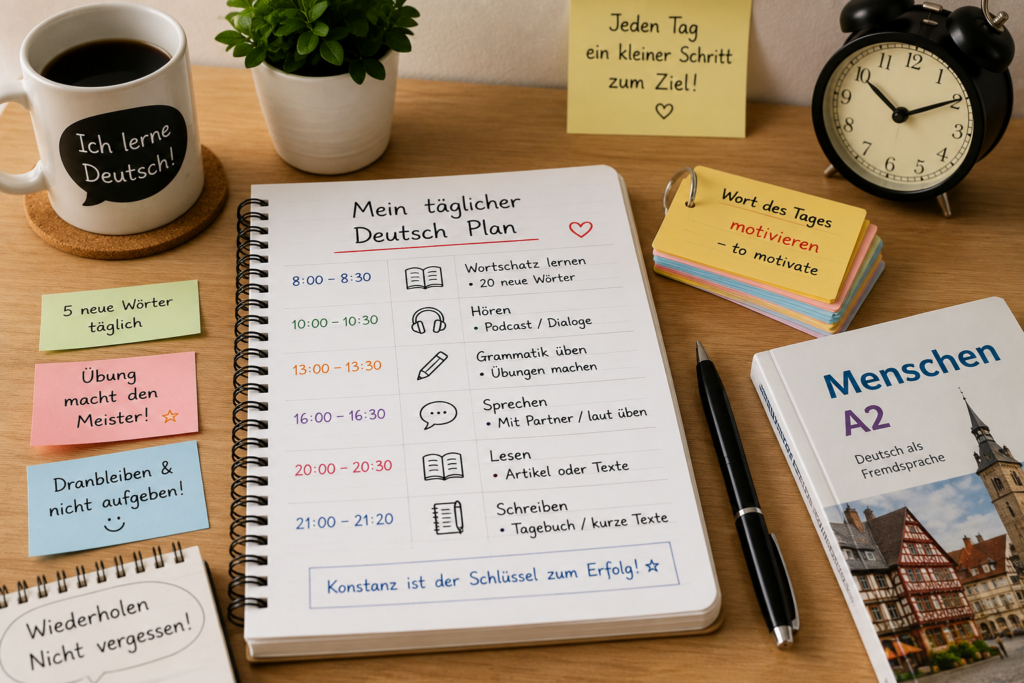
Most learners believe they need hours every day.
That’s a myth.
Research consistently shows that daily consistency beats occasional marathon study sessions.
Happy learners interact with German every day.
Instead of saying:
“I’ll study on Saturday.”
They say:
“I’ll spend 15 minutes today.”
Their daily routine might include:
- Reading one short article
- Listening to a German podcast
- Learning five new vocabulary words
- Writing three simple sentences
- Speaking aloud for ten minutes
These small wins create massive progress.
Why This Works
Your brain remembers languages through repetition.
Studying once a week forces your brain to start over every time.
Daily exposure strengthens long-term memory and improves recall during conversations.
Habit 2: They Don’t Fear Mistakes
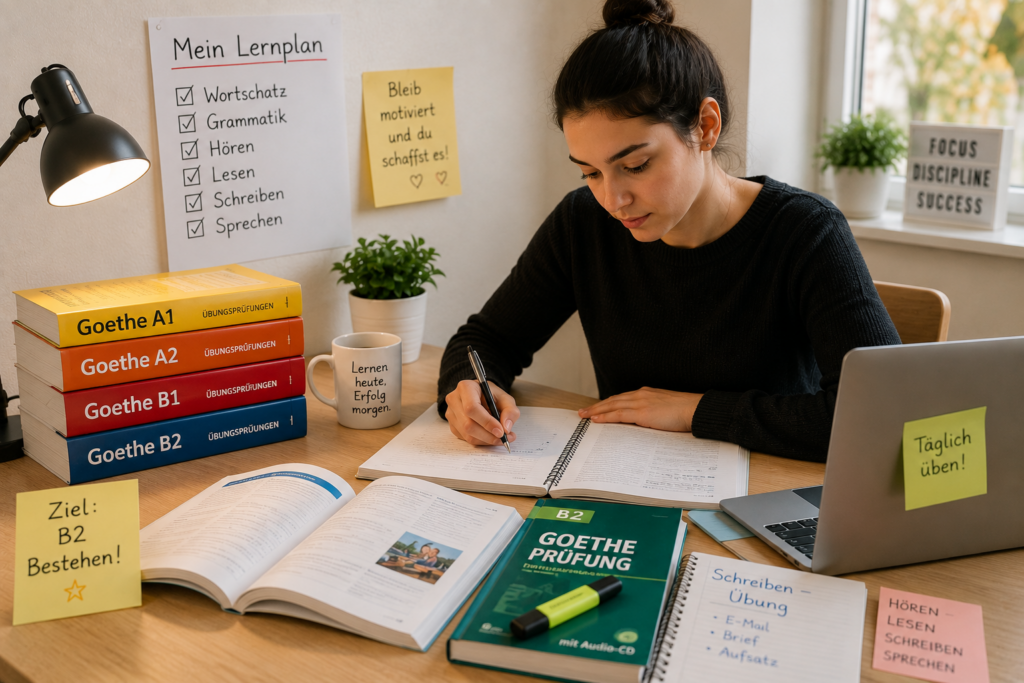
Many learners wait until their German is “perfect.”
Unfortunately…
That day never comes.
Happy learners make mistakes proudly.
They speak.
They forget words.
They mispronounce sentences.
They laugh.
Then they improve.
Remember this simple truth:
Every mistake is one step closer to fluency.
Children don’t become fluent because they never make mistakes.
They become fluent because they aren’t afraid to make thousands of them.
Replace Fear With Curiosity
Instead of thinking:
“What if I say it wrong?”
Ask yourself:
“What will I learn today?”
Confidence grows only through speaking.
Not through silent studying.
Habit 3: They Learn German as a Lifestyle—Not Just a Subject
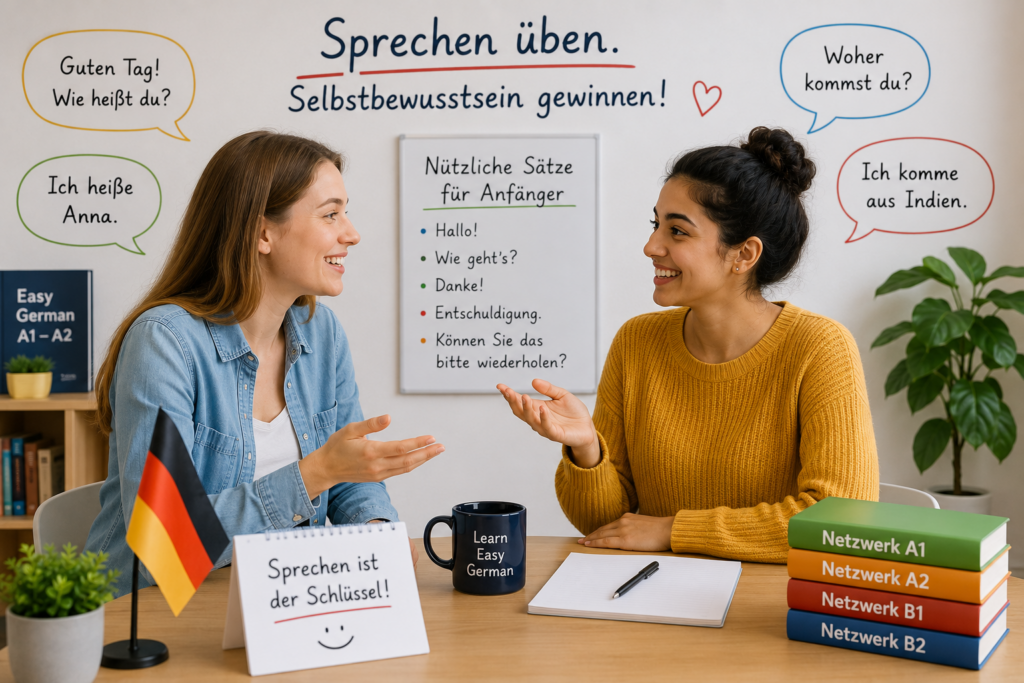
The happiest learners don’t stop learning when class ends.
German becomes part of their everyday life.
They change their phone language.
They follow German creators on Instagram.
They watch Netflix with German subtitles.
They listen to German music while cooking.
They read children’s books.
They label household objects in German.
They think in German.
Instead of asking:
“When should I study?”
They ask:
“How can I bring German into my day?”
That tiny mindset shift changes everything.
The Daily Formula That Successful Learners Follow
If you want steady progress, try this simple routine:
Morning (5 Minutes)
Learn five new German words.
Afternoon (5 Minutes)
Listen to a short German audio clip.
Evening (10 Minutes)
Speak about your day in German.
Just twenty minutes daily can completely transform your confidence within months.
Common Mistakes That Slow Down German Learning
Many students unknowingly sabotage their progress.
Avoid these habits:
❌ Memorizing vocabulary without using it
❌ Studying only before exams
❌ Translating every sentence into your native language
❌ Avoiding speaking practice
❌ Giving up after making mistakes
Instead:
✔ Practice actively
✔ Speak every day
✔ Learn grammar through real examples
✔ Revise regularly
✔ Celebrate small improvements
How Learn Easy German Helps Students Build These Habits:

At Learn Easy German, we believe fluency isn’t created by memorizing hundreds of grammar rules.
It’s built through consistent practice, expert guidance, and real communication.
That’s why our courses include:
✅ Interactive live online classes
✅ Structured Goethe exam preparation (A1–B2)
✅ One-to-one speaking practice sessions
✅ Practical grammar explained in simple English
✅ Daily practice activities
✅ Personalized feedback from experienced trainers
Whether you’re learning German for higher education, career opportunities, family reunification, or immigration, our teaching method helps you build habits that last long after the course ends.
Success Isn’t About Being the Smartest
The happiest German learners aren’t gifted.
They’re consistent.
They embrace mistakes.
They make German part of everyday life.
If you develop these three habits, you’ll be amazed by how quickly your confidence grows—and how much more enjoyable learning German becomes.
Remember:
Fluency is not achieved in one giant leap. It is built through small, consistent steps taken every single day.
Ready to Become a Happy German Learner?
If you’re looking for a structured, supportive, and result-orientated German learning experience, Learn Easy German is here to guide you every step of the way.
Whether you’re preparing for Goethe A1, A2, B1, or B2, our expert trainers, interactive classes, and personalised speaking practice will help you build the habits that lead to real fluency—not just exam success.
🌍 Website: https://learneasygerman.com
📱 WhatsApp / Call: +91 9789301810
Frequently Asked Questions (FAQs)
1. What is the best daily habit for learning German?
Practicing German every day for 15–20 minutes through speaking, listening, reading, and vocabulary revision is one of the most effective habits.
2. How long does it take to become fluent in German?
With consistent study and regular speaking practice, many learners reach conversational fluency within 12–18 months, depending on their starting level and goals.
3. Can I learn German online successfully?
Yes. A structured online course with live classes, expert guidance, and speaking practice can be just as effective as in-person learning.
4. How can I improve my German speaking confidence?
Speak every day, don’t fear mistakes, practise with trainers or language partners, and use German in real-life situations whenever possible.
5. Which German certification is best?
The Goethe-Zertifikat is one of the most widely recognised German language certifications for study, work, and immigration.
The happiest German learners aren’t the ones who know the most—they’re the ones who never stop learning. Build the right habits today, and your future self will thank you with every confident German conversation.
🎯 Enroll Today & Get a FREE 1:1 Live Demo Class!
✅ Expert Trainers
✅ Interactive Live Classes
✅ Goethe A1–B2 Exam Preparation
✅ Personalized Speaking Practice
✅ Flexible Weekday & Weekend Batches
🌐 Website: https://learneasygerman.com
📲 WhatsApp: +91 9789301810
