
Searching for the best German language institute in India can be surprisingly difficult.
Almost every language institute promises experienced trainers, small batches, exam preparation, flexible classes and high success rates. But those claims don’t always tell you what your actual learning experience will be like.
The better question is:
“Which German language institute is the right fit for your goal, current level, schedule and target exam?”
Whether you want to learn German for Goethe certification, TELC, studying in Germany, working in Germany, travel, immigration or everyday communication, the right institute should provide more than textbooks and recorded lessons.
This guide explains what to check before enrolling in a German course.
What Should You Look for in a German Language Institute?
A good German language course should combine several elements:
- Qualified and experienced German trainers
- A structured CEFR-based curriculum
- Regular speaking practice
- Listening, reading, writing and speaking development
- Exam-orientated preparation when certification is your goal
- Individual feedback and correction
- Appropriate batch sizes
- Transparent course fees
- Placement or level assessment
- Clear course duration and learning objectives
- Access to practice materials
- A realistic learning plan based on your starting level
No single factor determines whether an institute will be right for every learner. Your goal matters too.
For example, someone preparing for Goethe B2 may need a different course structure from someone learning German for travel or everyday conversation.
1. Check the Trainer’s Qualifications

One of the first questions to ask is:
Who will actually teach me?
Don’t rely only on statements such as “our trainers are highly qualified.”
Ask about the trainer’s:
- German proficiency level
- Teaching qualification
- German-language teaching experience
- Experience with Goethe or TELC examinations
- Experience teaching your specific CEFR level
- Experience working with learners from your background
A trainer who speaks German fluently may not necessarily specialise in teaching examination skills.
For an exam-focused course, you should ideally have a trainer who understands the exam format, assessment criteria and common learner difficulties.
Questions to ask
“Who is my trainer, and what qualifications do they have?”
“Have they taught this specific exam level before?”
“Will I receive individual corrections for speaking and writing?”
2. Look at the Batch Size

Batch size can significantly affect how much individual attention you receive.
A large class may give you less opportunity to speak, ask questions and receive corrections.
A smaller live class can make it easier for the trainer to identify pronunciation, grammar and speaking problems.
However, there is no universal “perfect” batch size.
Instead of asking only:
“How many students are there?”
Also ask:
“How much individual speaking time will each student receive?”
That is often the more useful question.
3. Find Out How Much Speaking Practice You Actually Get
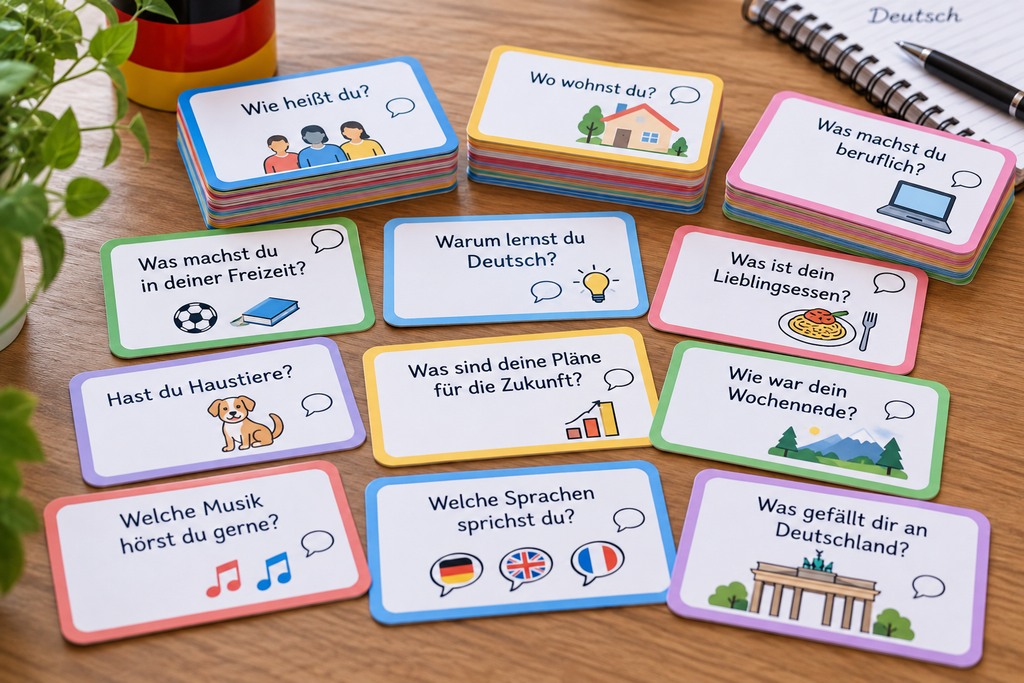
This is one of the most important questions for German learners.
You can understand German grammar extremely well and still struggle to speak.
A strong German learning program should give you opportunities to:
- Answer questions spontaneously
- Participate in conversations
- Give presentations
- Practice role plays
- Describe pictures or situations
- Express opinions
- Ask and answer follow-up questions
- Receive pronunciation corrections
- Practice exam-style speaking tasks
For learners preparing for German certification exams, speaking practice should not be something added only a few days before the examination.
Ask your institute:
“How much of each class is interactive?”
“How often will I personally speak?”
“Will the trainer correct my pronunciation and grammar?”
4. Check Whether the Course Follows the CEFR
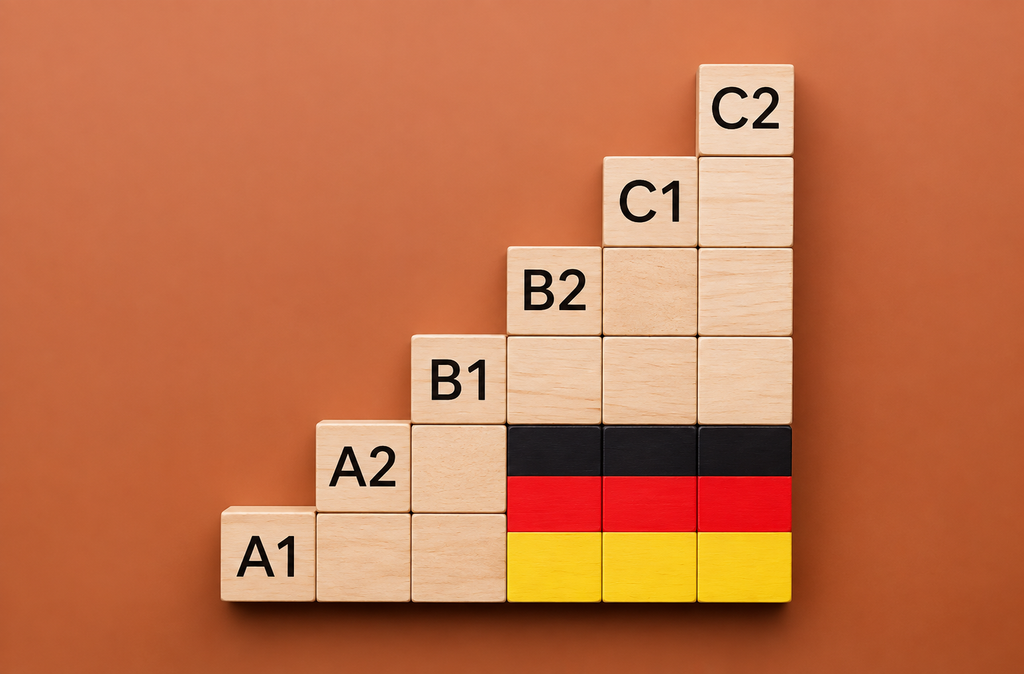
German courses are commonly structured around the Common European Framework of Reference for Languages (CEFR):
- A1 – Beginner
- A2 – Elementary
- B1 – Intermediate
- B2 – Upper-intermediate
- C1 – Advanced
- C2 – Proficient
A properly structured course should make it clear what you are expected to learn at each level.
For example, a B1 course should not simply be described as “more German”.
You should know what skills you are developing in:
Lesen → Hören → Schreiben → Sprechen
and what vocabulary, grammar and communication skills you should be able to demonstrate by the end of the level.
5. Check the Difference Between a German Course and Exam Preparation
Learning German and preparing for a German examination are related, but they are not exactly the same thing.
A general German course may focus on building language ability.
An exam-preparation course should additionally teach you:
- Exam structure
- Question types
- Time management
- Writing formats
- Speaking formats
- Listening strategies
- Reading strategies
- Assessment criteria
- Practice tests
- Common mistakes
- Feedback and correction
If your objective is a Goethe or TELC certificate, ask whether examination preparation is integrated into the course or offered separately.
6. Ask About Placement Testing
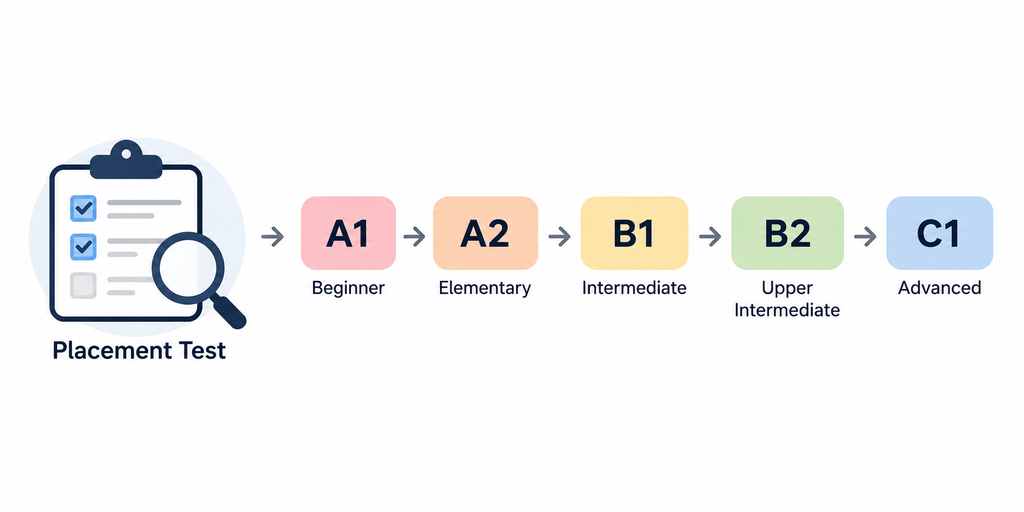
Before joining a course, you should know your actual starting level.
A good placement assessment can identify whether you should begin at:
A1 → A2 → B1 → B2 → C1
rather than simply choosing a level based on how long ago you studied German.
For example, someone who completed A2 several years ago may have strong reading skills but weak speaking skills.
A level assessment can help identify these gaps before the course begins.
7. Compare Online and Offline German Classes
Online and offline learning can both work well.
The more important distinction is often between:
Live and interactive
and
Pre-recorded + passive.
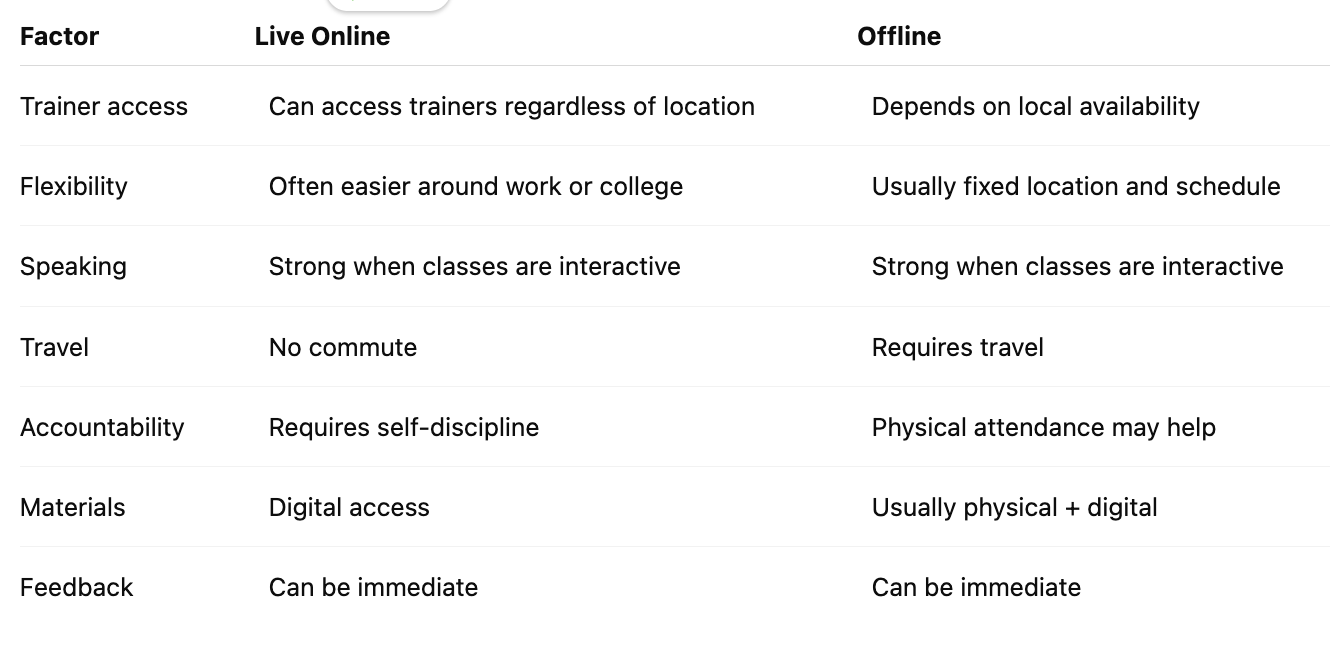
A live online German class can be highly interactive when students regularly speak, ask questions and receive corrections.
So don’t choose a format simply because it is online or offline.
Ask:
“How interactive is the actual class?”
8. Understand the Total German Course Fees
Course fees can be difficult to compare because institutes may structure their pricing differently.
Before enrolling, ask for a complete breakdown.
For example:
Course tuition
–
Study materials
–
Exam preparation
–
Mock tests
–
Speaking practice
–
Exam registration fee, if applicable
These may or may not be included in the advertised course price.
This makes it easier to compare different German language courses fairly.
You can also compare the:
- Total course duration
- Number of live sessions
- Class size
- Trainer experience
- Individual feedback
- Exam preparation
- Additional learning resources
rather than comparing price alone.
9. Look for Real Student Outcomes
Testimonials can be useful, but look beyond generic statements such as:
“Amazing institute!”
More useful evidence includes:
- Verified student experiences
- Specific course outcomes
- Student progress stories
- Examination experiences
- Before-and-after learning journeys
- Detailed reviews
- Trainer feedback
If an institute publishes examination results or pass-rate statistics, check how those figures were calculated and what group of students they represent.
The goal is to find a German learning program that gives you the training, practice, feedback and support needed for your specific goal.
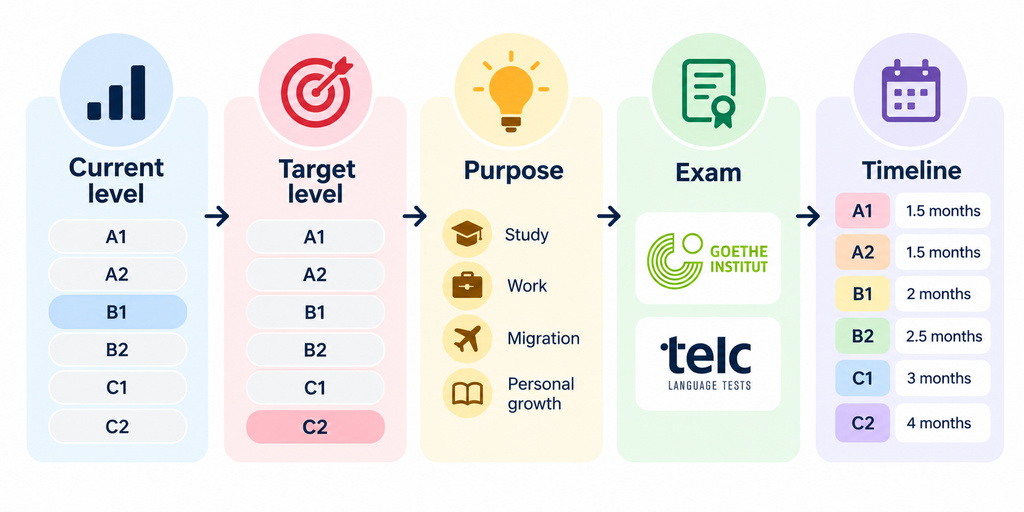
Start with your current level. Define your target. Then choose the learning path that connects the two.
Ready to find the right German learning path?
Explore Impearly: https://impearly.com/
